
Next-Gen MMOs: Why the Future of MMO Gaming Means Killing the Daily Grind
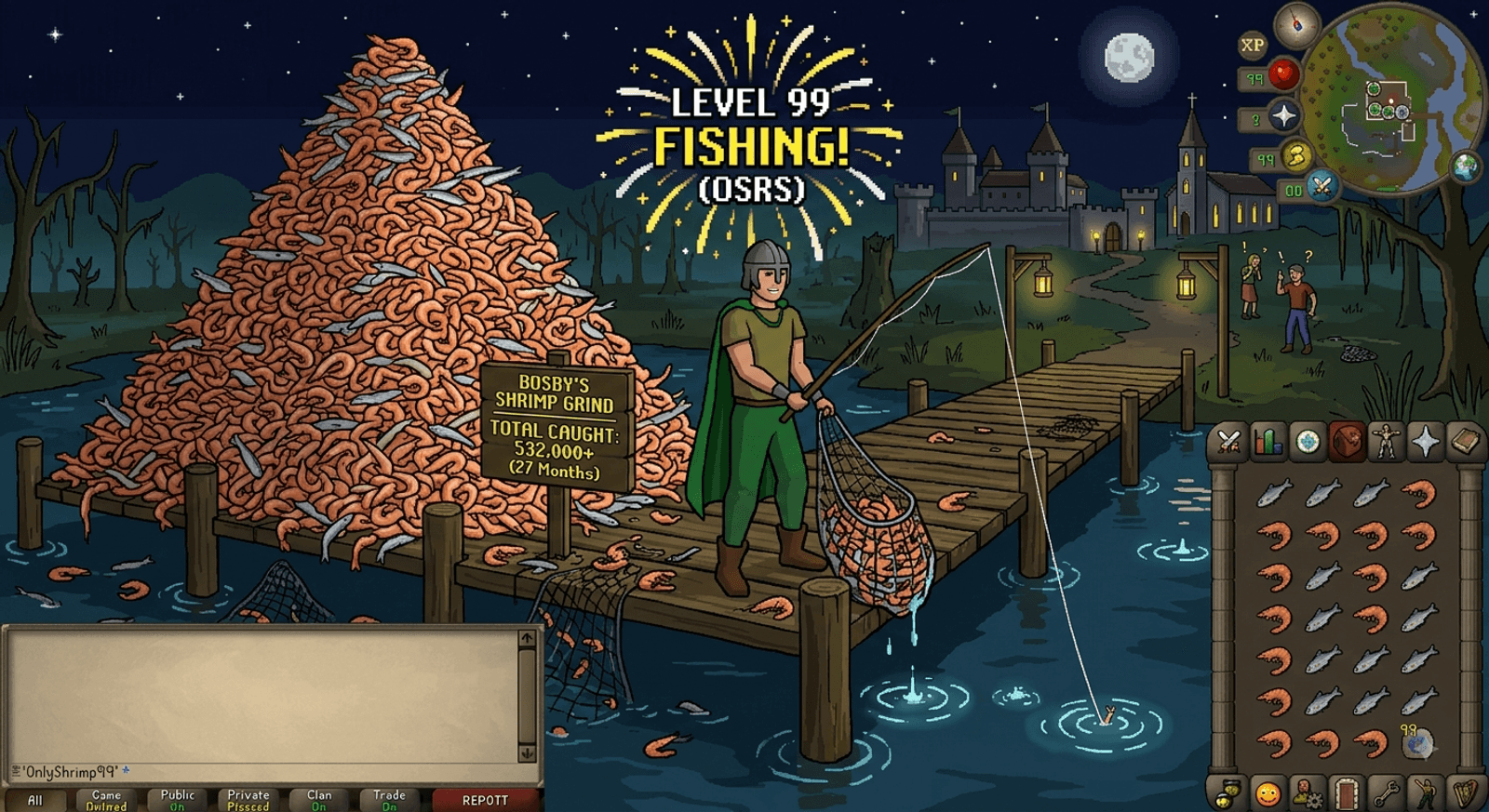
Every MMO eventually turns into a job.
Log in. Do your dailies. Clear your weeklies. Check your monthlies. Repeat until the content well runs dry, then wait for the next patch to refill it. That loop is the backbone of modern MMO gaming — and it's also the thing quietly killing it. The genre keeps optimizing the treadmill instead of asking whether the treadmill should exist at all.
If you're searching for what next gen MMOs look like, this is the real fork in the road: not better graphics, not bigger servers, but a fundamental rethink of how content gets delivered. The future of MMO gaming isn't a static world you memorize and grind. It's a living sandbox that generates a different experience every time you step into it.
The Problem With Today's MMO Routine
Look at almost any live-service MMO on the market and you'll find the same skeleton underneath the skin:
- A finite set of hand-authored dungeons, raids, and zones
- Daily quest hubs that reset on a timer
- Weekly lockouts on the "real" rewards
- Monthly events that reskin old content with new currency
- A gear treadmill that exists mainly to justify the next treadmill
This structure isn't an accident — it's a retention strategy. Developers pour enormous budgets into hand-crafted content, and the only way to make that content last is to ration it out through artificial timers. The routine isn't there because it's fun. It's there because it's the cheapest way to stretch a finite amount of designed content across months of playtime.
The result is a genre where the first few weeks in a new MMO feel like discovery, and every week after that feels like maintenance. Once you've cleared the checklist a few times, you've seen the whole game — you're just doing it again, on a schedule, for smaller and smaller rewards.

What Next-Gen MMOs Could Look Like Instead
The alternative isn't "more content, faster." Studios already can't out-produce player consumption — that arms race is unwinnable. The real shift is moving away from fixed, memorized content entirely and toward instanced, generative content assembled from a sandbox of reusable pieces: maps, monsters, mechanics, and loot tables that recombine dynamically every time you play.
Instead of a static dungeon you run identically every Tuesday, imagine a system where:
- Maps are modular, not memorized. Instead of one fixed dungeon layout, the game draws from a library of map fragments — rooms, corridors, biomes, hazards — and assembles them into new instanced spaces on the fly. You're never running "the same dungeon" twice; you're running a new configuration built from familiar parts, closer to a procedurally-assembled roguelike floor than a scripted raid.
- Monsters and encounters are composed, not scripted. Rather than every mob pack being hand-placed, encounters get built from a pool of monster behaviors, elemental affinities, and mechanic modifiers that the game mixes and matches. A next-gen MMO encounter isn't "boss #14 with the same three phases everyone already looked up on a wiki" — it's a fresh combination players have to actually read and react to.
- Mechanics themselves are the sandbox. This is the deeper shift. Instead of designers hand-scripting every fight, the game maintains a toolbox of mechanic primitives — zone denial, add waves, enrage timers, environmental hazards, positional puzzles — and an instance can be generated by combining them in new ratios and sequences. The "content" isn't a fixed script anymore; it's a generative system that produces scripts.
- Loot flows from the sandbox, not a static table. Rewards get tied to the specific combination of map, monsters, and mechanics you just cleared, so loot feels like a byproduct of what you actually did rather than a number rolled against the same table everyone grinds. Rarity and power still matter, but the context of how you earned it is different every run.
Put together, this turns the MMO from a memorized checklist into something closer to a live sandbox: a set of systems and building blocks, not a finite museum of hand-placed content you eventually exhaust.
Why This Actually Solves the Retention Problem
The daily/weekly/monthly grind exists to manage a scarcity problem — not enough hand-made content to fill player time. Generative, instanced content solves that scarcity at the source instead of rationing it with timers.
- No content drought. If encounters are assembled from a sandbox rather than authored one at a time, the game doesn't run out of "new" the way a fixed dungeon list does.
- No solved metas. Wikis and guides thrive on static, memorizable content. When maps, monsters, and mechanics recombine each time, "the answer" from a guide stops being reliable, and players have to actually engage with the moment-to-moment game again.
- Player time respected, not gated. You stop needing artificial daily/weekly locks to stretch content, because the system can keep producing meaningfully different sessions on demand instead of drip-feeding a fixed supply.
- Long-term replayability without server-wide resets. A generative sandbox can keep producing fresh combinations for years without a content team racing to author the next patch before players burn through the last one.
This is also why next-gen MMO design leans naturally toward instancing rather than a single shared open world for this kind of content. Instancing lets the generative system tailor a run to a group without breaking the persistence of the broader world — the open world stays the social backbone, while instanced pockets are where the sandbox actually generates your personal, ever-changing content.
The Trade-Offs Worth Naming
This isn't a magic bullet, and it's worth being honest about the hard parts:
- Hand-authored content has a craft ceiling generative systems struggle to match. A brilliant, bespoke boss fight designed beat-by-beat by a human designer can hit emotional and mechanical highs that a combinatorial system may flatten out over time. The best next-gen MMOs will likely blend the two — generative sandboxes for the bulk of content, hand-authored set pieces for tentpole moments.
- Balancing a combinatorial system is genuinely hard. When maps, monsters, and mechanics can combine in thousands of permutations, guaranteeing every combination is fair, beatable, and fun is a much harder design and QA problem than balancing a fixed dungeon list.
- Community and shared culture depend partly on shared experience. Part of what makes MMOs social is everyone having cleared "that one fight" together. A world where everyone's instance is procedurally different can weaken some of that shared water-cooler moment — unless the sandbox is tuned to still produce a handful of iconic, common configurations alongside the personalized ones.
None of these are dealbreakers — they're design problems, and design problems get solved with iteration. But it's why the shift toward generative MMO content is likely to be gradual, showing up first as generative dungeon or instance systems bolted onto otherwise traditional MMOs, before any studio goes all-in on a fully generative world.
The Bigger Picture
The genre's biggest hits proved that persistent worlds and player-driven economies can hold attention for decades. What they haven't solved is the exhaustion that comes from finite, hand-authored content stretched thin by artificial routines. Next-gen MMOs that lean into instanced, generative sandboxes — recombining maps, monsters, mechanics, and loot — have a real shot at fixing that, not by producing more content faster, but by changing what "content" even means.
The dailies-weeklies-monthlies model isn't going away overnight. But the MMOs that actually break the cycle won't do it with a bigger checklist. They'll do it by making sure there's no fixed checklist left to memorize in the first place.
“What do you think next-gen MMOs need to get right first — generative combat encounters, procedurally assembled dungeons, or something else entirely? Drop into the stream at twitch.tv/sibbletv and let's talk about it.”